ITSM Incident Management Process: A Formal Guide for Consistent Service Delivery
Resolve unplanned disruptions quickly.
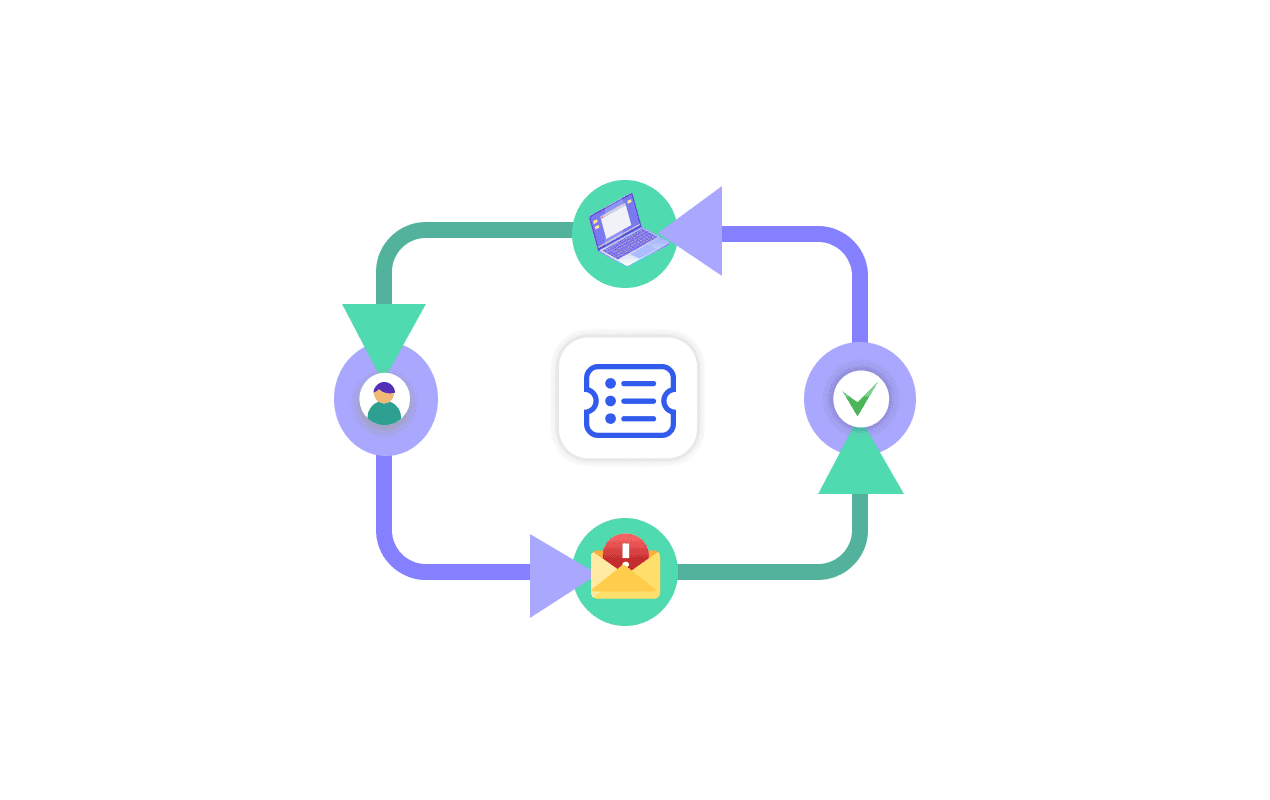


Resolve unplanned disruptions quickly.
In ITSM, incident management is a service management practice and an element of IT service management focused on restoring normal service delivery as quickly as possible when an incident has occurred. An incident is typically any unplanned interruption or reduction in quality affecting a system or service that supports business operations. In formal terms, an incident is defined by impact, urgency, and the number of users affected, and it is recorded in an incident record from the moment the incident is identified until incident is resolved and verified.
A structured incident management process ensures every incident is handled consistently, with an appropriate response process for responding to and resolving service interruptions, minimizing disruption, and protecting service level commitments. While management processes vary by organization, standardized management processes provide repeatable controls to manage incidents in a way that is auditable, measurable, and aligned with best practice.
A robust approach to service management ensures continuity of business operations even when outages, defects, or external issues affect services. The incident management process supports operational stability by enabling rapid detection, controlled escalation, and timely incident resolution. When an outage occurs, the organization must prioritize restoration to reduce customer impact and protect contractual service level commitments.
Effective service management also reduces operational risk by enforcing a consistent workflow: incidents are logged, classified, assigned to the appropriate support team, and tracked through defined incident handling steps. Over time, standardized management processes improve predictability, help teams identify patterns, and reduce time taken in incident response. This is particularly important when a major incident threatens critical services, where speed and governance must coexist throughout the process.
Incident management should be distinguished from adjacent management processes to avoid misrouting work and delaying restoration. The table below provides a clear comparison.
| Category | Incident | Problem | Service Request |
| Primary objective | Restore service quickly and resolve user impact | Identify root cause and prevent recurrence | Fulfill a standard user request |
| Typical trigger | Incident detection from user or monitoring tool/monitoring system | Repeated incidents or unknown underlying cause | Standard request (access, equipment, information) |
| Outcome | Incident resolution and closure | Corrective actions through the problem management process | Delivery of a requested item/service |
| Related practice | Incident management practice | Problem management and problem management process | Request fulfillment |
In a controlled service management environment, incidents are handled for speed, whereas problem management is used to analyze recurring issues and validate the cause of the incident at a deeper level. The process of incident management restores normal operations; problem management process prevents recurrence by addressing the underlying cause.
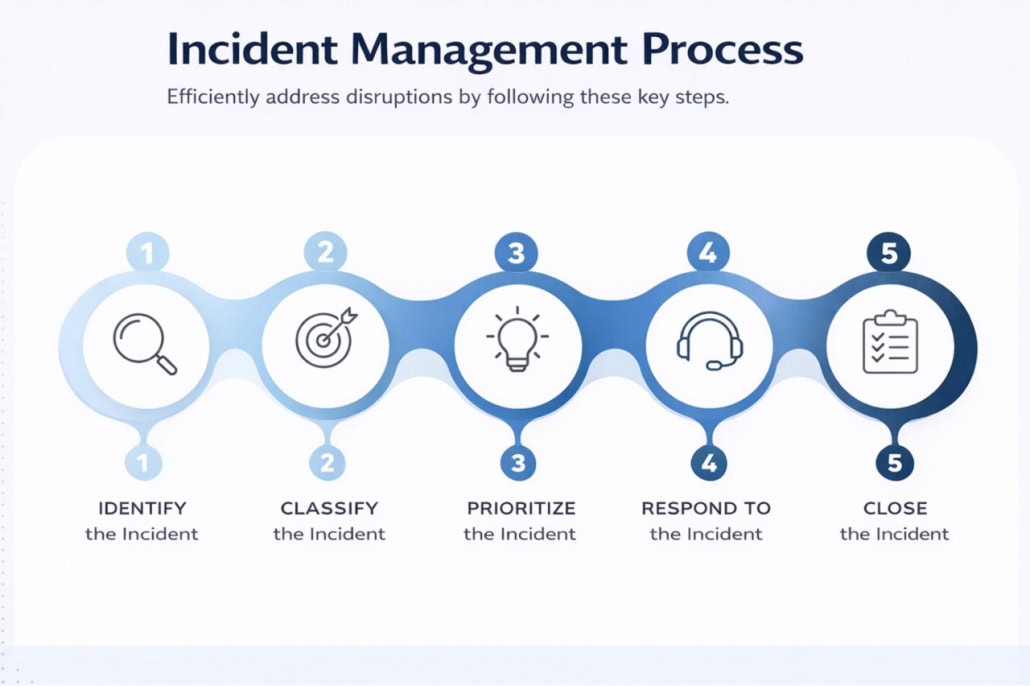
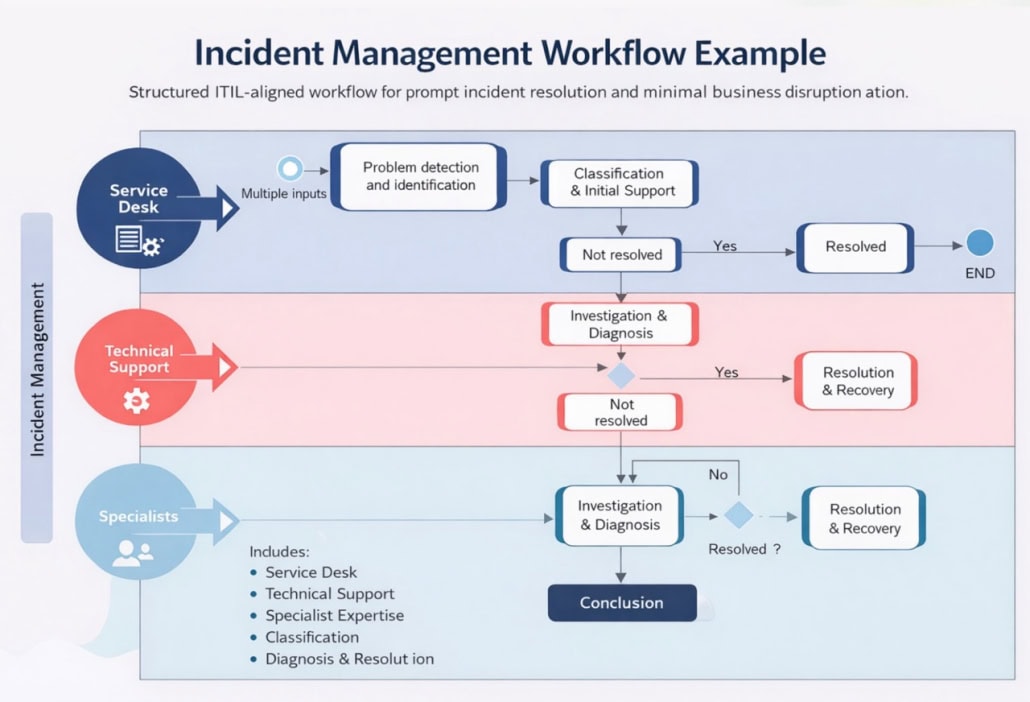
The incident management process is a formal set of management processes that begins when an incident is reported or detected and ends when the service is restored and the record is closed. The incident lifecycle includes identification, logging, incident categorization, prioritization, diagnosis, escalation, resolution, closure, and review. A standardized approach improves governance across management processes, ensures consistent service delivery, and supports reporting and continual improvement within ITSM practices.
In many organizations, the service desk is the single point of contact to report an issue, register the incident record, and coordinate incident response. For urgent cases and high-impact disruption, a major incident path is invoked, including dedicated roles such as an incident manager and, where applicable, a major incident team.
Follow us on LinkedIn for the latest product insights, feature previews, and more exclusive updates.
Below is a detailed, standardized sequence aligned with ITIL 4 thinking and common management best expectations. This detailed process flow establishes how the incident will be handled consistently throughout the process.
1. Incident identification
The first stage occurs when the incident is defined and the organization confirms that an incident has occurred. Identification may be initiated by a user calling the service desk, by an automated alert from a system monitoring capability, or by an integrated monitoring tool in a monitoring system. This incident detection step should capture the nature of the incident and confirm that it impacts a system or service.
2. Incident logging and record creation
Once confirmed, the service desk creates an incident record and captures the details of an incident: affected service, symptoms, time, impacted users, and relevant context. The record should include a consistent template so information is complete and comparable across management processes. This record is the authoritative source used to track progress and to resolve audit, SLA, and quality requirements.
3. Categorization and prioritization
Next, categorization is applied using a formal incident categorization scheme to support analytics, routing, and trend management. The team then assigns priority based on impact and urgency to prioritize work appropriately. Priority decisions should account for the number of users affected, whether an outage is occurring, and the risk to business operations and service level commitments. This step also identifies the type of incident and may reference predefined incident models or an incident models library.
4. Initial diagnosis
During initial assessment, the service desk attempts to diagnose the issue using known fixes, historical incidents, and the knowledge base. The goal is to resolve quickly when possible, reduce unnecessary handoffs, and ensure that the incident is assigned correctly if deeper expertise is required. This stage often prevents small incidents from becoming an overall incident affecting multiple services.
5. Escalation (functional and hierarchical)
When the service desk cannot resolve within agreed timeframes or the impact increases, the incident is routed via controlled escalation. Functional escalation transfers work to the appropriate support team with relevant skills. Hierarchical escalation informs management or a designated coordinator when risk or impact requires greater authority.
A disciplined approach to escalation ensures teams escalate with context, not uncertainty. To reduce delays, the management workflow should define triggers (SLA thresholds, repeated alert signals, expanding scope, or suspected outage) and specify who must be notified, when to escalate, and how to document actions within the incident record.
6. Investigation and resolution
The assigned technical team performs investigation, applies fixes, and works to resolve service impact. Where needed, temporary workarounds are used to resolve the issue quickly while permanent remediation is planned. The focus remains to resolve service restoration safely, validate the fix, and communicate progress. This step concludes when the team can confirm incident resolution and verify that service performance is restored.
If the event becomes a major incident, a separate path is invoked with tighter governance, frequent communications, and structured coordination so teams can resolve rapidly without creating uncontrolled changes. In severe cases, rapid restoration may require coordination with change management to ensure emergency actions are authorized and traceable.
7. Closure and documentation
After restoration, the service desk confirms with the user or monitoring evidence that the incident is resolved and that service quality meets the agreed service level. The incident record is updated with resolution details, actions taken, and any learning captured. Closure should include a concise incident report for significant incidents, ensuring traceability across management processes and supporting future prevention efforts.
Prioritization is the control mechanism that keeps the incident management process aligned with business objectives. In formal service management, priority is typically derived from impact and urgency, and it should reflect risks to service continuity and contractual obligations.
| Priority | Typical impact | Typical urgency | Example scenario |
| P1 | Critical, widespread | Immediate | Production outage affecting customers |
| P2 | High, multi-user | High | Key function degraded, many users impacted |
| P3 | Moderate | Medium | Partial issue with limited scope |
| P4 | Low | Low | Minor disruption, workaround available |
The organization should define incident severity criteria and align it with service level targets and escalation rules. This ensures teams can prioritize consistently and resolve within commitments, even when volumes increase.
Organizations commonly struggle when management processes are not standardized or when teams lack a consistent workflow. Typical issues include inconsistent routing, incomplete records, and slow diagnosis. In many environments, noisy alert streams from a monitoring system increase workload and reduce clarity, making it harder to identify a clear incident and focus efforts.
Another frequent challenge is unmanaged handoffs: teams escalate without complete information, which delays time to resolve and increases rework. Finally, poor separation between incident restoration and problem management analysis can create confusion, where teams search for root cause during restoration rather than focusing on restoring service quickly and initiating problem management process work afterward.
The following are recognized best practice actions used in mature service management organizations to strengthen outcomes:
These actions strengthen service management, improve predictability across management processes, and support disciplined execution.
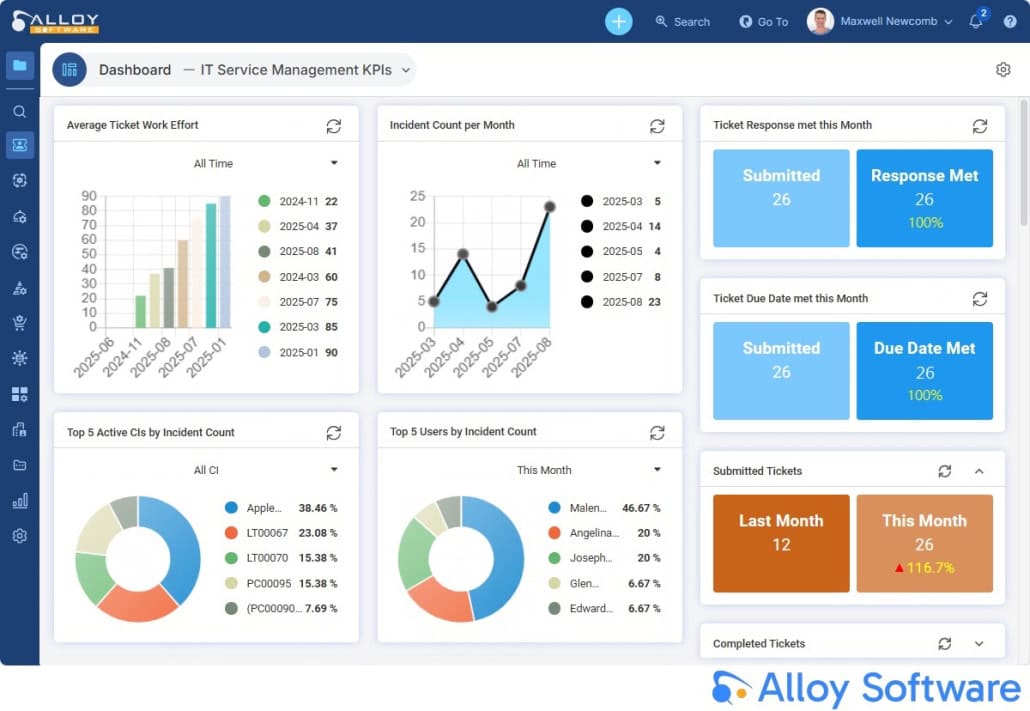
A formal service management program should measure outcomes to validate improvements in the incident management process and related management processes. Common metrics include time to respond, time to restore service, reopen rates, and compliance with service level targets. Operational reporting should highlight whether teams consistently resolve incidents within targets, and where escalation or assignment delays occur.
Metrics also help identify candidates for prevention efforts: repeated incidents typically indicate an underlying cause requiring problem management process analysis, or a need for automation or better record quality.
Modern ITSM platforms support consistent execution by enforcing policy, automation, and reporting across core management processes. In particular, an incident tool ensures each incident record follows the expected workflow, supports SLA-based routing, and provides auditable tracking. Integrations with a monitoring tool can convert events into actionable tickets, ensuring the incident is identified quickly and that teams can resolve faster with context.
Many readers will encounter comparisons to jira service management, which also provides workflows, queues, and integrations. Regardless of platform, the objective is the same: create a controlled management workflow so the incident will be handled consistently, and so teams can resolve within targets while maintaining governance.
Alloy Software supports a standardized approach to the incident management process as part of an integrated service management capability. Organizations can configure a structured workflow to support intake, triage, assignment, controlled escalation, and closure, ensuring consistent execution across management processes.
Key capabilities include configurable forms and template-based records to ensure complete incident record data, SLA rules to protect service level commitments, and automation to escalate when thresholds are approached. Alloy’s routing and coordination features help the service desk and the assigned support team collaborate efficiently, accelerating incident response and ensuring teams can resolve incidents with clear ownership and traceable actions.
For high-impact events, Alloy can support a defined major incident path, including role-based coordination (such as an incident manager where required), communication routines, and structured documentation to confirm that the incident is resolved and that follow-up actions are initiated.
It restores normal service quickly, minimizes disruption to business operations, and ensures incidents are logged, prioritized, and resolved within service level targets.
A major incident has higher impact and urgency, requires expedited coordination, and typically involves a major incident team and structured communications.
Incident management focuses on restoring service; problem management identifies root cause and prevents recurrence after the incident is resolved.
No. However, ITIL 4 guidance and ITIL framework concepts, including ITIL incident management, provide proven structure many organizations adopt.
A well-defined ITSM incident management process is essential for maintaining service stability, minimizing business disruption, and meeting service level commitments. By following a structured, ITIL-aligned approach—from identification and logging through prioritization, resolution, and closure—organizations can ensure incidents are handled consistently, transparently, and with the right level of urgency.
Standardization across incident management not only improves response times and accountability, but also creates the data foundation needed for continual improvement and effective problem management. When supported by clear roles, defined escalation paths, meaningful metrics, and the right ITSM tools, incident management becomes a predictable and controllable capability rather than a reactive scramble.
Ultimately, mature incident management enables IT teams to restore services quickly while protecting governance, customer trust, and operational resilience—turning unplanned disruptions into managed, measurable events that strengthen overall service delivery.